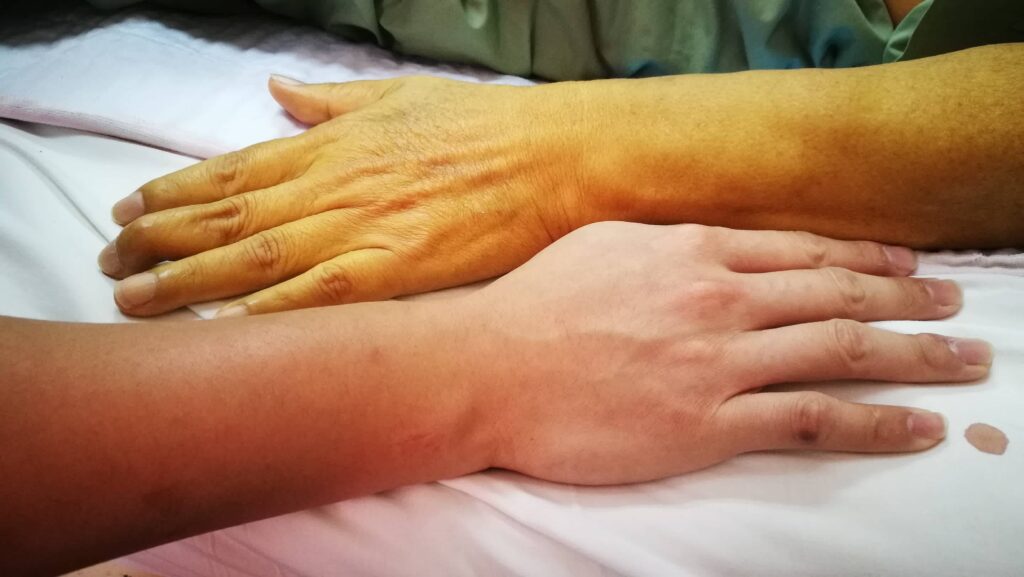
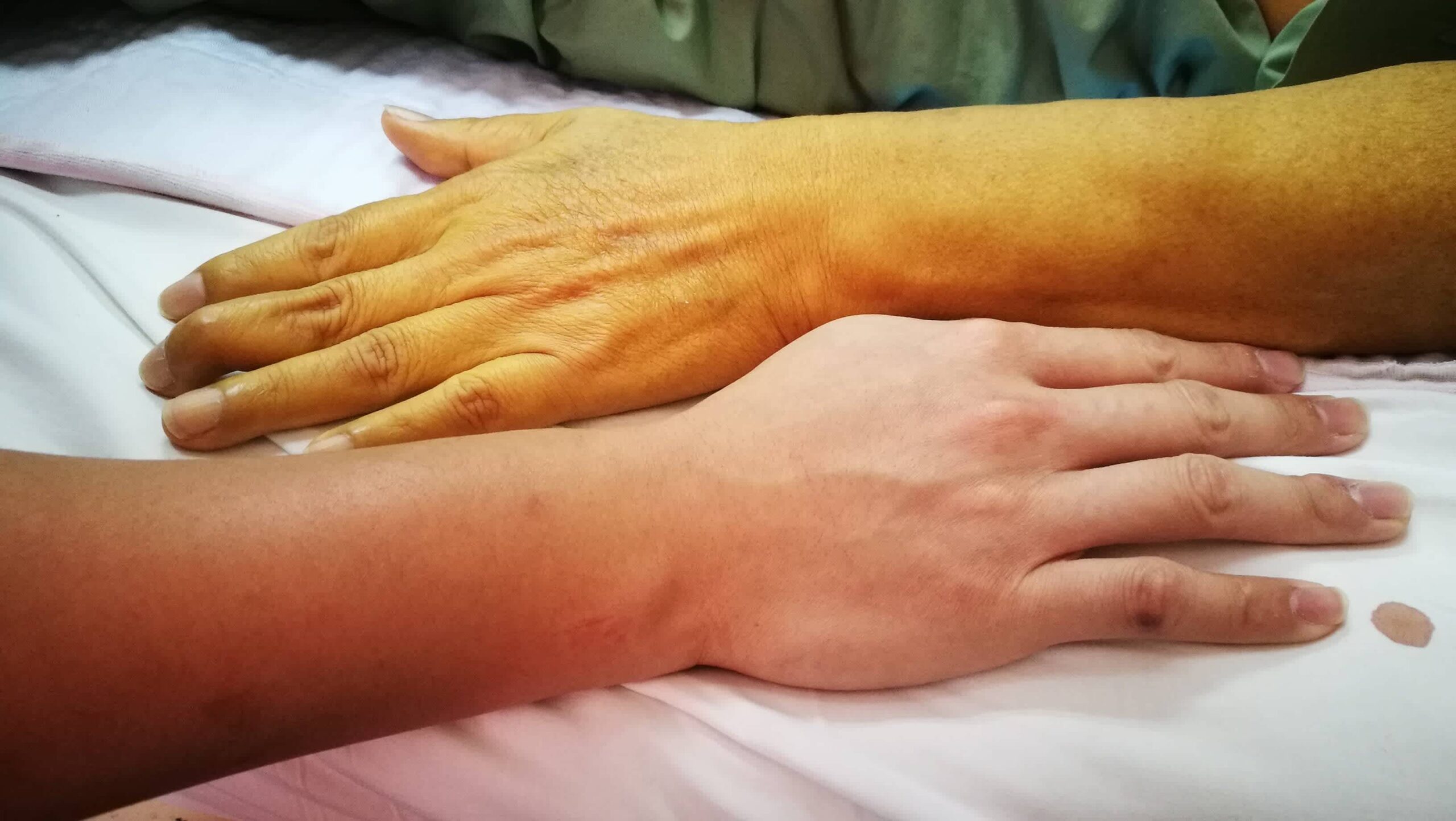
What is jaundice?
What are the symptoms of jaundice?
Sometimes, the person may not have symptoms of jaundice, and the condition may be found accidentally. The severity of symptoms depends on the underlying causes and how quickly or slowly the disease develops.
If you have a short-term case of jaundice (usually caused by infection), you may have the following symptoms and signs:
1. Fever.
2. Chills.
3. Abdominal pain.
4. Flu-like symptoms.
5. Change in skin color.
6. Dark-colored urine and/or clay-colored stool.
What causes jaundice?
aundice can be caused by a problem in any of the three phases in bilirubin production.
Before the production of bilirubin, you may have what’s called unconjugated jaundice due to increased levels of bilirubin caused by:
1. Reabsorption of a large hematoma (a collection of clotted or partially clotted blood under the skin).
2. Hemolytic anemias (blood cells are destroyed and removed from the bloodstream before their normal lifespan is over).